All guides Plate II Beginner

Leopard gecko

Eublepharis macularius

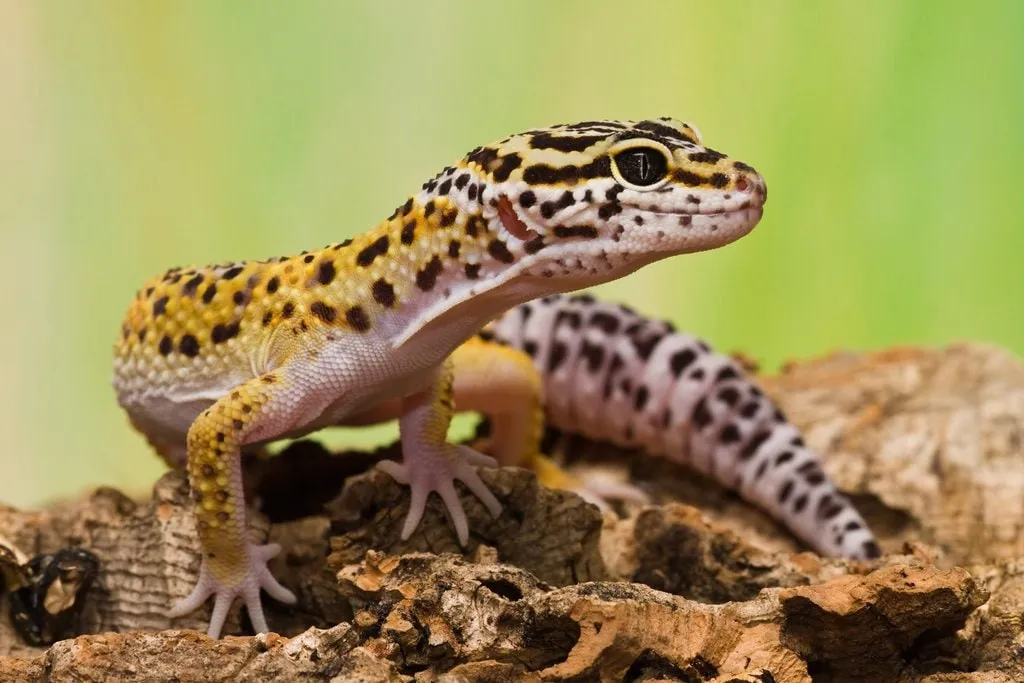
As the most widespread lizard in the hobby, the leopard gecko is an ideal choice for anyone taking up this fascinating hobby for the first time. It originates from the southern parts of Central Asia — Iran, Afghanistan, Pakistan and northern India. Thanks to its gentle nature, easy handling and interesting looks, it will win over even the biggest opponents of the hobby.

Leopard gecko (Eublepharis macularius)

Quick facts

Origin
Iran, Afghanistan, Pakistan, N. India
Size
18–25 cm
Activity
nocturnal
Enclosure
from 70×40 cm for a pair
Temperature
about 28 °C · nights to 20 °C
UV lamp
not required
01

Appearance

One of the notable features of these lizards, and what sets them apart from most other geckos, are their claws and movable eyelids. An adult gecko measures 18 to 25 cm, depending on sex, genetics and keeping conditions. The body is spindle-shaped with the characteristic spots along its whole length, which gave the species its name. Another feature is the thick, cone-shaped tail, dotted with blunt spine-like bumps, in which fat reserves are stored.

By crossing differently coloured animals and manipulating genes, a wide range of colour varieties (morphs) has been created. It is not unusual for some keeper-collectors to work exclusively with this species in order to breed very rare and valuable unusual morphs. Some morphs: Sunglow, Snow, Enigma, Black Pearl, Blizzard, Bandit, Jungle, Tangerine…

02

Choosing and buying

As when buying any other pet, ask around on relevant websites, forums and among other keepers to find a reliable, quality breeder. A healthy gecko should be agile and active when picked up. The eyes must be clear, the nostrils clean, and the body well filled out, with no protruding bones. Poor nutrition can lead to metabolic bone disease (MBD), which shows as a deformed jaw and/or limbs. Also check whether there is old shed skin left on the toe tips (5 toes per foot), around the claws. Retained shed is the result of low humidity in the enclosure and, if not treated, can cut off blood supply and cause the toe to drop off.

03

Behaviour

First of all, this is a nocturnal lizard, so they are not very active during the day — they mostly sleep in a hide. Towards evening they leave the shelter and start moving around the enclosure looking for food. Interestingly, they eat their own shed skin, so do not expect to find pieces of shed in the enclosure. They can sometimes be quite fussy about food, so if they refuse a certain type of insect, simply offer another kind.

Leopard geckos can drop their tail in a stressful situation (rough handling, a fall from a height, being grabbed by the tail), which should be kept in mind when taking them out of the enclosure. Otherwise they are very tolerant and cope well with frequent handling, so consider them if you want a pet for regular interaction.

04

Sexing

Sexing leopard geckos is relatively easy. Between the hind legs, males have a row of prominent V-shaped pores, usually larger and darker than the surrounding ones. Males also have hemipenal bulges, visible as swellings near the vent, which females lack.

05

Enclosure and conditions

The enclosure should mimic their natural habitat — dry, with (artificial) plants and plenty of logs, bark and rocks to serve as hides. The footprint ranges from 35×25 cm for juveniles, 70×40 cm for a pair, up to 90×50 cm (and more) for a group of geckos. A suitable height is in most cases equal to the width. If you intend to keep several animals together, provide plenty of hiding places to avoid conflict. Keeping one male with several females is also recommended. Fine sand (not quartz), small gravel, carpet or paper towels can be used as substrate. Avoid coir, as it can cause impaction or intestinal injury if eaten, although it is advisable to keep damp coir or moss in the hides so the moisture helps with shedding.

Ventilation openings should be positioned on both sides of the enclosure. The temperature should be around 28 °C; a couple of degrees either way is acceptable. Night temperature can drop to 20 °C. Temperature can be maintained and regulated with spot lamps, heat mats and ceramic heat lamps. Since these are nocturnal lizards, a UV lamp is not necessary for their metabolism. A regular fluorescent tube is recommended as daytime lighting, combined with a heat mat under the floor that is always on, because these geckos take heat from the ground. The heat mat should be positioned under one third of the enclosure. For night lighting a weaker, dark-coloured lamp can be used, so the light does not disturb the gecko’s natural behaviour.

06

Food and water

Water can be provided in a shallow dish. Keep the water clean — if the gecko fouls it with droppings or other dirt, clean the dish as soon as possible. Leopard geckos are insectivores, although they sometimes develop a taste for an occasional treat such as honey or fruit purée. Young geckos eat 5–10 insects a day, while adults eat 5–10 insects every 2–3 days, depending on the size of the insect (no larger than the space between the eyes). They can sometimes be picky, but in our experience they never refuse crickets, which are ideal as a staple food. Mealworms, superworms, Turkistan roaches, dubia etc. are also on their menu.

Along with insects, vitamin and mineral supplements need to be added regularly. For an adult gecko, calcium once a week and a vitamin-mineral powder once a week is enough, by rolling the insects in the powder before feeding. Since geckos cannot overdose on calcium (they can on vitamins), it is also recommended to place a separate dish of calcium in the enclosure, which they will lick as needed. In the colder months leopard geckos may enter brumation. This is a milder form of hibernation, marked by loss of appetite, sluggishness and lethargy. It is quite possible for the gecko to eat nothing for 2–3 months during this period, which is no cause for concern. Always keep clean water available and offer an insect now and then. Once fully awake from brumation, it will become more active and its appetite will return.

See our feeder insects for this species

The advice given in this text is the result of many years of experience combined with literature and should not be taken as the definitive and only way of keeping the species. To get a fuller picture and give your pet a long and healthy life, we advise you to consult several sources. If you have any further questions, you can contact us by e-mail: petreptilez@yahoo.com

Interested?

Contact us for more information about this pet, availability and care advice.